Sustainable Local News Solutions – Jen Austin on The Entrepreneur’s Logbook
A recurring AI-assisted local news service that delivers broadcast-ready scripts every day. Here is what is in a plan, what it costs, and how stations air it under their own name.

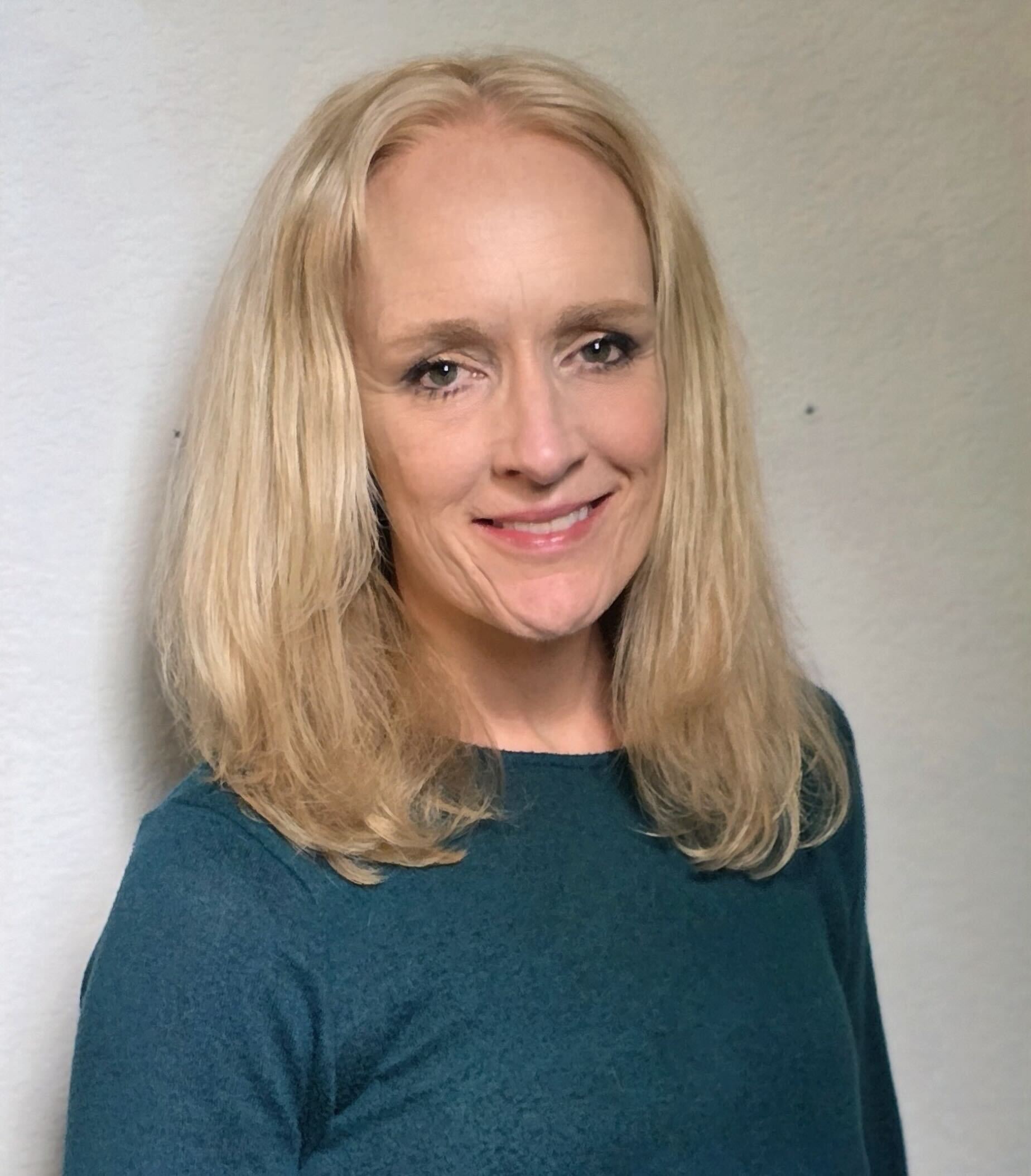
Riply is a community-driven intelligence platform specifically for local radio stations to produce broadcast-ready, hyper-local news content faster and more sustainably without sacrificing quality and credibility. Throughout over 30 years of experience in the radio industry, Jen Austin, founder of Riply, has watched newsrooms shrink, budgets tighten, and the demand for local coverage grow. Jen recently joined Zach Maynard on an episode of The Entrepreneur’s Logbook to talk about how Riply combines story gathering with human editorial oversight to address this gap and help stations keep communities informed in a way that is both scalable and credible.
How does Riply work in practice?
Every major industry, from medical and insurance to finance and beyond, is using AI, so this is radio’s answer for AI. Riply delivers professional local newscasts, edited by experienced broadcasters.
As a radio station, you would go to riplymedia.com and tell us about yourself. It’s kind of a customized get-to-know-you section that allows you to tell us not only about your city, but about your community. I’m in Dallas-Fort Worth, and we have Arlington; we have all these little cities around, and they’re all important to local news coverage. In other cities, it may just be one city, but you want to cover all of these communities.
When you go to the website, you tell us about your area and what’s important to you. We understand that not every city has the same sort of news needs. It could be an agricultural environment, or it could be a very high-tech industry, so you just tell us about yourself, your community, and your listeners, and then we use that information to target what you want. It’s a very ground-up, custom thing you would build.
Then, there is an onboarding process where we ask more questions about your community, make sure we understand it, and then at the end of this simple process, which is maybe a few days, you will get a dashboard and a list of the scripts you want. It could be news, sports, entertainment news, lifestyle, community-oriented, local events, hard news – again, customized. This dashboard starts loading, and it’s always generating, so you just have to tell us what you need, then subscribe and get it. It goes on a dashboard, and you can start playing it for your listeners.
Each station can really customize what they are getting. I think of a city like Minneapolis, where they’ve had a lot of hard-news headlines recently, but they also have sports fever right now with hockey, basketball, baseball season, and everything happening. They have plenty of headlines, and it’s just different everywhere- what’s important to every city. We want to hit that and make sure we’re giving each community what they need.
What does the human oversight piece actually look like in the workflow?
We felt from the beginning that it was very important to have humans involved, kind of holding AI’s hand and telling it what to do. I’ve been in radio for so long, and AI was not around when I started. When it came along, I thought, “Is it going to replace me? Is it going to replace voices? How do I know it’s accurate?” I had the same questions everyone else has.
We’ve built in so many parameters and have spent almost a year testing, developing, going through trial and error, and refining Riply. We pretty much think of it as a long pathway, like you’re walking down a long road and there’s woods on either side, but it’s going to stay on the path. We’ve told it what we need. It has to answer the same several questions every time it goes out and has definite parameters it has to stay on, which really eliminates the problems we might have heard about AI doing in the past; it’s not just AI gone wild. It’s on a very distinct path, and it knows what to get. It’s like, okay, there, and then I’ll look there, and then I’ll come back, and do you like it? So, then the humans approve what it brings back. Humans have developed it, refined it, and ultimately, humans are going to use it as a tool to make everything more efficient, faster, better, and more economical.
Humans are so essential to the process and what we’ve developed. The developers have got the technical side, and I’ve got the content experience to tell them what is a good news story versus what is not so much. Working with them in combination, we’ve formed this whole thing as a human team.
A lot of news desert communities have lost consistent local coverage. How significant is that problem right now, and what’s actually driving it?
It is a big problem, and a lot of it has to do with economics. There’s no budget to cover local news because it takes so much time, energy, and experience to know what you’re looking for, how to write a good story, and to reach people and connect. All of that is a really time-consuming process, and you’ve got to pay people to do that.
I grew up in a midwestern environment, and my dad would go to the coffee shop to get the news, or they would get on the phone and call each other. It’s not the most accurate or reliable way to get information because things get twisted in the process. Smaller places do suffer from a lack of news and the resources to gather news. We gather in big markets, too, and those are no exception to the problem. They’ve had shrinking newsrooms for years, too, and it’s been a process of just budget cuts.
A news desert means they lack an abundance of news and a system for gathering that, but Riply can help. The news is there. News still happens in those places. We know where to look to find it and bring it back, and help us connect. Some of these smaller communities generate a lot of news. We’ll have 20 stories come back that people don’t know about because they haven’t heard about them. We’ll put three of those into the newscast, three into the next one, or six, depending on the length of the newscast, and so on. But there is a lot. It’s a whole field that needs to be harvested. It’s there, it’s growing, we just have to find it.
What’s the difference between the model of a station relying on more of the national content news network feed and what Riply is doing?
They’re great sources of information, but it’s usually a one-size-fits-all type of network feed approach. In all of those communities, we think it’s more of something that needs customization. It needs the resources to look in those markets for stories that people are talking about on the local level, but they don’t hear on the radio because it’s not available from the network feeds. Sometimes they customize a little bit, but we customize a lot more and give people those stories.
I think this will actually help more stories be told, and not just the surface-level, over-the-top kind of stories. It’s really interesting local stories that people can talk about.
With your years of experience in the newsroom, where do you actually see the line between what AI can handle responsibly and where a human still has to be in the room?
We want to be told stories by humans. The human element of storytelling is so important, and it’s so emotional. There’s a connection to other humans, and we want to continue that process, but when there are fewer humans telling those stories and fewer local journalists, something has to step in because the pressure doesn’t go away. There is still the pressure to tell local stories, to do it well, and to relate to people, so AI comes in to do the heavy lifting and gathering. Personally, it used to take me two to three hours a day to write news stories, and now this process has slimmed it down significantly. It takes 15 minutes, and I have the opportunity to look it over, say “that makes sense,” “I like this story, that’s a great one I probably would not have found,” and I have all of this other time to do other things. It frees me up to be efficient with other tasks and still look over the news.
It’s that human element that is going to deliver it and is the frosting on the cake. All the work’s been done, and now we can just concentrate on the pretty part of it – delivering the news and relating to audiences.
What would your advice be to stations experiencing this problem in terms of ensuring they can deliver great coverage to everyone in a streamlined way?
The number one thing is Riply is a huge timesaver. If the local team of anchors has Riply writing the script, they can just read it. We also have voice opportunities with different voices to plug in, so if a station wants to go that route, we can help with voices. It’s the whole package.
Overall, it allows anchor and anchor staff to branch out into other things, too. Maybe they want to cover the local news – well, we can help with that, or sports, lifestyle categories, entertainment news, rock music news, and do some of those other things for the station while that local staff is gathering content differently. We contribute to the team effort. I’m happy that humans are so involved, and I’m happy that the local stations still have humans there. Taking away human involvement is not the point. It’s to add to it and make it more efficient. AI makes radio people faster, more efficient, and better. It’s a tool, and it’s not going away, so radio should harness the power of it and help it work for us.
To hear the full conversation, listen to the full episode of The Entrepreneur’s Logbook today.
Keep local news on your air
See what daily, human-reviewed local coverage looks like for your market, under your station's brand, not ours.
Book a DemoKeep reading

Riply’s Jen Austin on School for Startups Radio
A recurring AI-assisted local news service that delivers broadcast-ready scripts every day. Here is what is in a plan, what it costs, and how…

Scaling Hyperlocal News Through AI Innovation – Jen Austin on High Velocity Radio
A recurring AI-assisted local news service that delivers broadcast-ready scripts every day. Here is what is in a plan, what it costs, and how…

AI in the Newsroom – Riply Media Founder Jen Austin on The Sound Off Podcast
A recurring AI-assisted local news service that delivers broadcast-ready scripts every day. Here is what is in a plan, what it costs, and how…