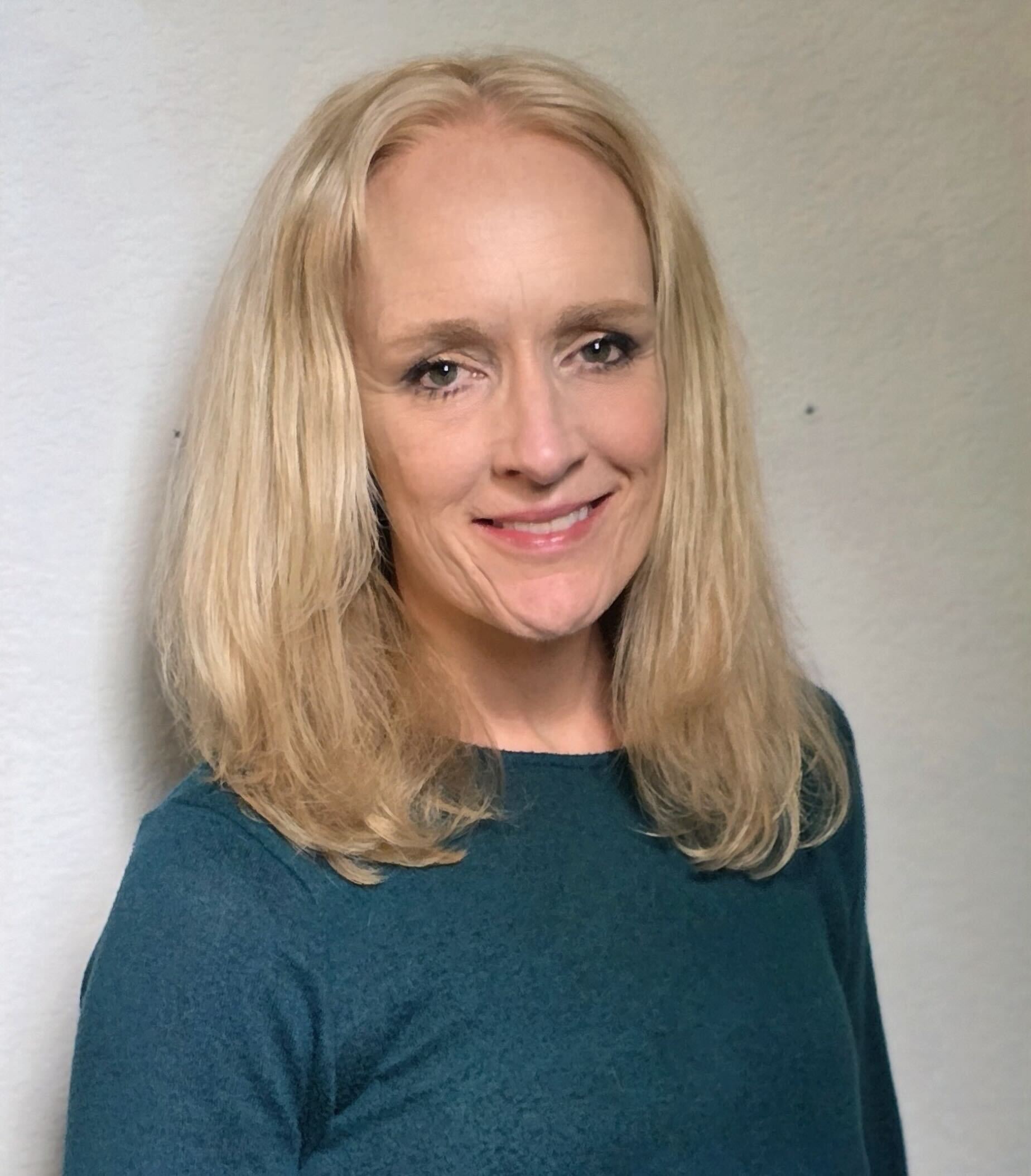
Riply’s Jen Austin on School for Startups Radio
A recurring AI-assisted local news service that delivers broadcast-ready scripts every day. Here is what is in a plan, what it costs, and how stations air it under their own name.

On School for Startups Radio, host Jim Beach discusses all things small business and entrepreneurship. Jen Austin recently joined him for an episode to discuss AI in the radio space and how Riply, a full-service, ready-to-air newsroom, was created to support local radio rather than replace it.
How did you get into the industry?
I grew up in rural Nebraska, so my upbringing was cows, cornfields, and very few people. My grandmother lived down the road, again a very small-town environment where everyone sticks together. In high school, I would go to her little farmhouse every afternoon to have coffee. I’d tell her about school, science, and basketball, and I would say, “What’d you do today?” She’d always say something like, “Well, I heard that John Smith fell off the tractor, and I heard that so-and-so harvested their corn and got X amount of dollars for their truckloads.” She always had information. I had no idea where it came from. She never offered a source, but I realized that news travels so quickly in these rural environments if you ask the right questions. The only thing faster than my grandma with that information now is AI – she might have been the original AI. It also made me realize how plugged in we like to be and how good it feels to have information and be the first to know about stuff. That really led me into communication and discovering information, journalism, writing, and all that. I give a lot of credit to rural Nebraska.
I went to college at the University of Nebraska in Lincoln and got my first radio job there. While I was in Lincoln, my dad was still in rural Nebraska, about three hours west, and put up an old radio tower. He found it in a junkyard and put it up in his yard at his farmhouse. The signal was staticky, but it worked, and that’s how he listened to his daughter on the radio. Of course, now we have apps, and so this is one example of how technology has changed. No need to find an old radio tower in a junkyard!
What’s happened to radio and what are your thoughts on the future of radio?
There are many different forms of entertainment now, and there’s a wide capacity for everybody to sort of pick their own. I listen to different forms of entertainment too, but in the car, the radio is very important. Getting ready in the morning, you want to be the first to know about the news and weather and get your day going. I’ve got a favorite morning show here in Dallas, and I think everybody does. Just waking up with the radio is part of the routine. It does have problems, though.
It’s gotten smaller over the years, and newsrooms especially have been shrinking. There are layoffs upon layoffs, and the business itself is shrinking a little bit. At the same time, the people who are left are required to do more with less, so radio stations, anchors, and personalities are looking for ways to be efficient with their time. Now that AI is here, radio is not the only industry that’s harnessing it – insurance, medical fields, podcasters, and nearly every industry uses it. AI can be helpful. As long as we have it as a human-led entity, it can be very effective.
How’d you get the idea for Riply?
I’ve been in radio for decades, but I’ve done quite a bit of news. I found myself writing and spending two and three hours a day writing news. I thought, “There’s gotta be a faster way.” AI came along, and I thought I could use it to shorten my circuit a little bit. It’s still my original thoughts, my sourcing of material, and my creativity, but using AI to handle some of the mundane and repetitive tasks could help. It sped me up, and I thought, “This can be done on a larger scale.”
Now, we’ve basically taken my habits and my eyeball, and we look around the internet for stories as a human would. We find those stories and bring them back. Riply is not AI unchecked; it goes down a very specific path every day, answering the same questions, going through the same parameters, and bringing back news that is needed just as a human would. We still have humans involved in every step of the process to make sure everything is as it should be. But that’s where it came from – just wanting to be more efficient with my own time, then meeting the right people, and having investors to back us. This is radio’s answer to AI.
What kind of information can people expect to get from Riply?
Weather, sports, local politics, all of that. If you are in Des Moines, you can tell it you only want Des Moines news, or only Des Moines sports. You can tell it you want Iowa Hawkeyes in the sports. It’s very customizable.
It works based on what you tell it. You can have national news or state news. You can pick 5 minutes a day of that, 10 minutes a day, or 20 minutes, depending on your needs and how much you want to spread it throughout the day. If you’re in Lincoln, Nebraska, where I used to live, we can point it that way. You subscribe, tell us where you are, and then it starts generating content. Anywhere you are, we can harvest news.
Then, human anchors on the local end can read the scripts live on air. We also have an option where other human news anchors will do it for people who are short-staffed. It’s completely customizable, from the content to the type of voice you have. For us at Riply, it’s about letting AI do some repetitive tasks. To hear the full conversation, tune into the full episode of School for Startups today. Learn more about Riply’s available packages and pricing at riplymedia.com.
Keep local news on your air
See what daily, human-reviewed local coverage looks like for your market, under your station's brand, not ours.
Book a DemoKeep reading

Scaling Hyperlocal News Through AI Innovation – Jen Austin on High Velocity Radio
A recurring AI-assisted local news service that delivers broadcast-ready scripts every day. Here is what is in a plan, what it costs, and how…

AI in the Newsroom – Riply Media Founder Jen Austin on The Sound Off Podcast
A recurring AI-assisted local news service that delivers broadcast-ready scripts every day. Here is what is in a plan, what it costs, and how…

Sustainable Local News Solutions – Jen Austin on The Entrepreneur’s Logbook
A recurring AI-assisted local news service that delivers broadcast-ready scripts every day. Here is what is in a plan, what it costs, and how…