Jen on The Encouragers – The Radio Rally Podcast
A recurring AI-assisted local news service that delivers broadcast-ready scripts every day. Here is what is in a plan, what it costs, and how stations air it under their own name.
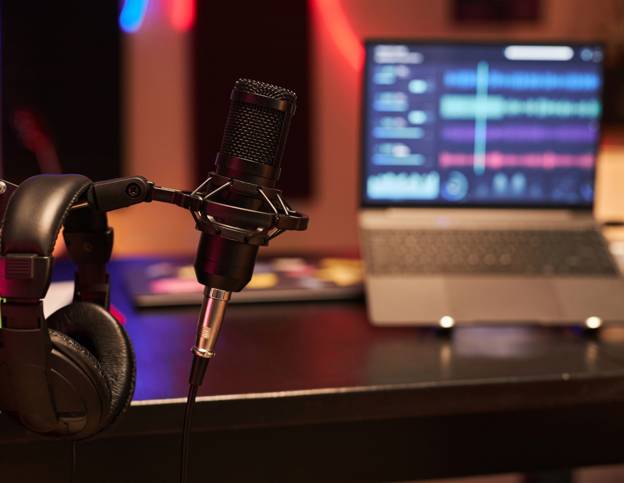
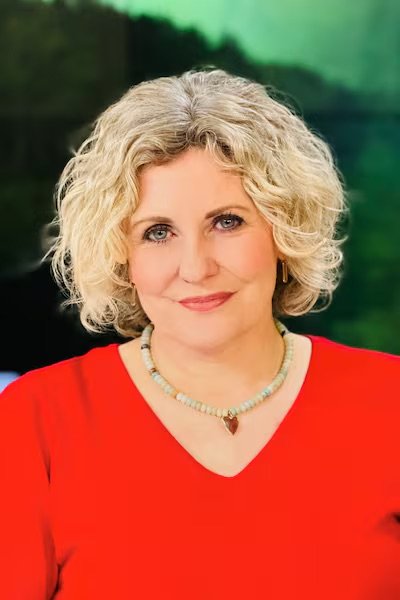
Riply’s founder, Jen Austin, recently joined host Loyd Ford for an episode of The Encouragers The Radio Rally podcast to talk about engaging listeners, networking, collaboration, ratings, entrepreneurship, and more. Read on to learn more about her journey, including challenges, victories, risks, rewards, and how it led to Riply.
https://podcasts.apple.com/us/podcast/the-encouragers-radio-rally/id1578823843
Can you tell us a story about before you worked in radio?
I tried to win a contest one time. This was in Lincoln, Nebraska, and I listened to 96 KX all the time. They had this window sticker contest where you get the little decal at the gas station or wherever, grab one, and put it on your car. If they found you, you’d win cash. I had my little Pontiac Sunbird, and when they would say where their general location was, I’d drive right there. I found them, I got in front of them, and almost slammed on the brakes so they would see my sticker, but they didn’t. They took a right turn, and I had to go straight through the light, so I missed my opportunity to win.
That contest made an impression on me because radio is very local. It’s right there; it gives you a chance to win stuff, but it’s more about being with the people. I missed my chance, but I tried, and then later on I would give money away and do all the contests from the other side, so I came full circle.
Your first job ever was at a fast food restaurant called West Drive In in Elwood, Nebraska, where you were born. What did that first job teach you?
It taught me hard work. I think I made $2 or something insane. It was a lot of work for very little. It also taught me community, really. The boys would come sit in the coffee shop, and I would be cleaning the ice cream machine and the coffee pot and listening. They’d have conversations, so I’d learn all the gossip around town, but they always came in there. I learned people want to have time to be together. That was probably the original social networking framework in America right there in rural Nebraska – just talking. They knew everything. They never had a source or anything credited, but they always knew everything that was going on.
What did you hope your education at the University of Nebraska would prepare you to do? Did you already see broadcasting as your future back then?
I did! My speech and drama teacher in high school came up to me in the gym one day, and he said, “You need to be on the speech team.” I was so shy and scared, but he saw some sort of potential in me. I thought he was insane, but I did join the speech team, and I knew from that point. I started getting better and coming out of my shell a little bit, and I thank him for that. At that point, I think I knew I wanted to do something in communication; I just didn’t know what.
Then I went on a tour of the University of Nebraska during my senior year of high school. I discovered the football team, walked by the stadium, all of that, and I said I have to go here just to be a part of this football atmosphere and also do broadcasting. I majored in broadcasting from the get-go, never changed it, never wavered. I loved communication and gravitated toward radio. There was television and radio, and you had to pick one. I didn’t want to look like an anchor on TV, and I wasn’t so good at video editing and everything, so I went to radio. It was a great atmosphere with great professors, and they really taught me a lot.
How did your first real opportunity in radio come about?
Taryn Vanderford, who is now a TV anchor in Lincoln, Nebraska, was in my sorority and knew I was in broadcasting. She had a show on KZKX, and they were looking for interns, so she pointed me in the direction of Charlie Thomas, who did the afternoon show. I started running the board for him, and he taught me all his knobs and switches, gave me pointers, and answered all my questions for 2 to 3 months. Then, one night he put me on air from midnight to 2 am, live back in the day. We recorded that, did the air check the next day, and he told me I had potential but to work on this and that. I started doing that, and he kept air checking me, so he was instrumental in my career and gave me opportunities. He ended up hiring me for the 7 to midnight show later, and Taryn moved up to middays. He believed in me from the beginning and just gave me a lot of opportunities.
What did your first ratings success at KZKX teach you about connecting with listeners?
It really taught me to picture the audience. The station had a built-in, established audience anyway, and I knew that, but I would still get out and meet people at appearances and events to see who they were and hear other personalities talk about them. You really get to know the audience, and then I pictured them in my mind every time I opened the mic. Like, okay, this is what they look like, and this is what they’re doing. Pick a handful of them and just talk right to them. I took that from Lincoln to Dallas to everywhere I’ve ever been – just talk one-to-one or to a handful of people and know who they are.
What did your early experience with internet radio teach you about where broadcasting and technology might eventually intersect?
It was interesting because you thought, are people really listening on the internet? How is this happening? We were trying to figure it out ourselves too, but it was the first signal to me that an audience could be established online.
One of the big days and evidence of this was 9/11 when the Trade Center started going down. The phones were ringing off the hook, and that was proof to me that yes, the internet audience was there. They were listening and just needed to know information. They’re just consuming radio differently, but still wanted the same urgency and information we were used to on non-internet radio stations.
How did the transformation from individual performer to leader later in your career change the way you think about talent development, editorial standards, and accountability?
As EVP Content at Virtual News Center, I began leading over 20 anchors serving approximately 150 stations, and they are spread out geographically. I’m in Dallas; we have anchors in Wichita, Kansas, and in Delaware, so we don’t see each other every day. I can’t be constantly looking over their shoulders, but they are all very dedicated.
I think all of us in broadcasting want our reputations to continue, and so we really take pride in our work. When you have all these stations needing news, there can occasionally be a mispronunciation, a story gets missed, or something like that, but it comes down to how you recover from the mistake. So leading that group with the mindset of, okay, mistakes happen, and you’re going to recover from that is important, but they all ultimately do a great job. Having to unite all those people toward a common goal to produce great news and be current and topical was a whole different challenge for me, and still is. It was no longer just me, but a whole team of people that I needed to lead.
Across your career, you’ve worked in nearly every role in radio. Which changes were the most difficult for radio professionals to accept, and which changes ultimately created the greatest opportunities?
I think this AI world we’re living in is both. It’s changed, and it’s hard and scary at times, but it’s also going to present the greatest opportunity. I remember when we went from pulling CDs, stacking them up, and playing them out of the CD player to software, and there were a few people in the building like, “Oh no, I cannot do this software thing. I like the CDs. This is the end, right?” Everyone eventually adjusted, adapted, and learned. Technology comes around, and it can be a good thing that helps you reach a wider audience. I think in the case of AI, there’s just pressure to figure it out. Everybody’s got to do something because it’s not going away, so we have to harness the power and not be afraid of it.
I do have an open mind to these things because if you don’t adapt, you’re going to get stuck and be irrelevant. You’re going to be old and out.
You launched Riply, an AI-powered newsroom created specifically for radio broadcasters. What problem were you determined to solve with this, and how did you balance AI efficiency with human editorial judgment?
It’s a radio problem with not having enough people, and then a technology solution. With all the cutbacks over the past 20 years, some stations are left with one or two people. In these cases, how do they gather information and respond to the pressure to provide local information and stay connected to the community?
This tool, Riply Media, will gather the information. It populates local news stories, or it could be local community events or local sports, into a script. It can be 1 minute or 2 minutes or whatever the station decides, but it’s right there. You log into your dashboard, and the hyperlocal information is right there.
We use AI to help us get this information, and we put it on very defined tracks. It’s very much in check and not going to go wild and do its own thing. We’re keeping an eye on it, and we’ve told it what to do, but it looks around, gathers information, brings it back, and puts it into local news scripts that anchors can read. It can be a helpful tool to do more with a short staff, reach more people, and respond to that pressure to be local.
I love it, and I use it. It could just make everybody so much faster and free up time to do other stuff instead of worrying about gathering information.
What is the difference between using Riply vs other AI platforms?
At Riply, we are not setting it and forgetting it. We still look at it every single day, say okay, good, change this, or add this – it’s a constant process. We are constantly tweaking it because technology is smart as long as you train it.
I think some stations are trying to put interns or part-timers on it, and just saying, go find some news and use ChatGPT to bring it back. They may not have the experience that others who are a little bit more seasoned in the business have, so they’re going to enter the same commands and the same prompts over and over again every day. Riply just does it and is trained by seasoned journalists. Obviously, interns can be great! But this is a good tool and can be a bigger time saver.
Keep local news on your air
See what daily, human-reviewed local coverage looks like for your market, under your station's brand, not ours.
Book a DemoKeep reading
Riply’s Jen Austin on School for Startups Radio
A recurring AI-assisted local news service that delivers broadcast-ready scripts every day. Here is what is in a plan, what it costs, and how…
Scaling Hyperlocal News Through AI Innovation – Jen Austin on High Velocity Radio
A recurring AI-assisted local news service that delivers broadcast-ready scripts every day. Here is what is in a plan, what it costs, and how…
AI in the Newsroom – Riply Media Founder Jen Austin on The Sound Off Podcast
A recurring AI-assisted local news service that delivers broadcast-ready scripts every day. Here is what is in a plan, what it costs, and how…